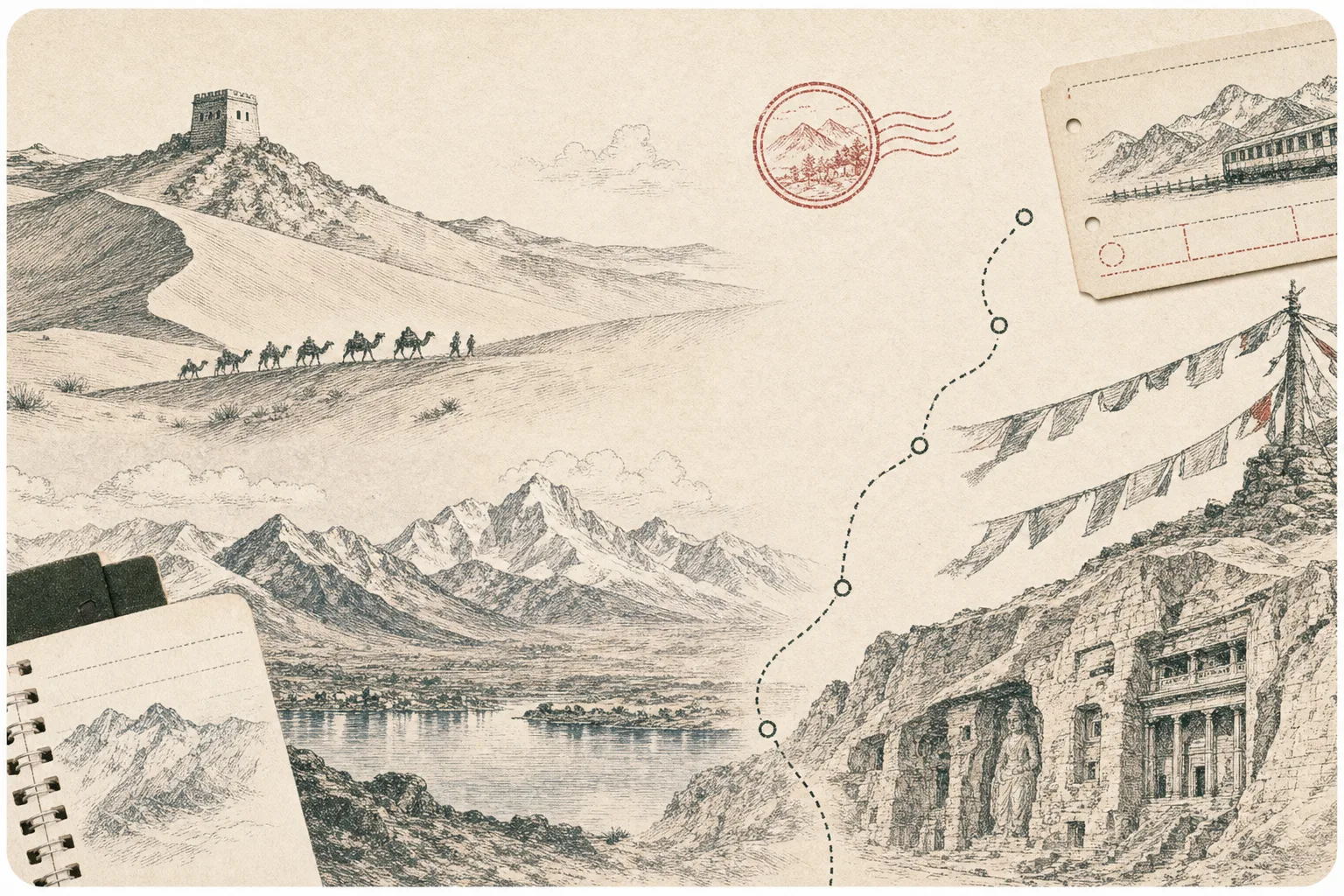
Xinjiang covers an immense area of mountains, deserts, basins, grasslands, oasis cities, and border regions. Urumqi to Kashgar is a major journey, not a local transfer, while Ili, Altay, Turpan, and the Karakoram routes point in different directions. A first visit becomes manageable only after choosing a geographic focus and accepting that several famous landscapes will remain for another trip.
Foreign-national access, border-area permits, identity checks, hotel registration, road conditions, and attraction rules can change and can vary by place and traveler status. Verify the current situation through China's National Immigration Administration, regional authorities, licensed local operators, and each accommodation before committing money. No old trip report can establish what will apply to your passport and itinerary in 2026.
- Realistic first trip
- Ten to fourteen days for one or two subregions
- Main constraint
- Very long distances and changeable local access
- Carry
- Original passport and current travel documentation
- Plan from
- Official rail, aviation, immigration, and local notices
Choose a coherent first route
A southern route can connect Kashgar with nearby oasis history and, when currently permitted, a carefully arranged Karakoram outing. An eastern route can pair Urumqi with Turpan. Northern itineraries toward Ili or Altay need more days and strongly seasonal road planning. Combining all of these in two weeks produces repeated flights and little understanding.
Select two anchors and count every intercity movement as at least half a day. Night trains can save a hotel night but not necessarily rest; flights reduce distance but introduce airport buffers and weather risk. Keep one unassigned day before the most important landscape or onward international connection.
Confirm access case by case
Most planning errors come from treating the region as governed by one simple tourist rule. Some border management areas and areas not open to foreign nationals require additional authorization. The National Immigration Administration publishes formal guidance, but the exact application route and eligibility still need confirmation for your identity and intended places.
Ask a licensed operator or the relevant public-security authority about each remote road, county, and overnight stop. Send the passport nationality and proposed dates, request the answer in writing where possible, and do not assume that a hotel booking proves entry permission. Regulations may change after transport is purchased, so use cancellable arrangements and recheck close to departure.
Build transport with large margins
China Railway provides the authoritative train inventory, while airline schedules should be checked directly with carriers and airports. Stations and airports may sit far outside urban centers. Arrive early for document checks and keep printed or offline copies of tickets, hotel addresses, and local contact numbers.
For road excursions, use a legal vehicle and a driver familiar with current checkpoints, seasonal closures, and fuel distances. Agree on the route, accommodation, included costs, and alternate plan before departure. Never ask a driver to bypass a checkpoint, enter a closed road, or improvise in a restricted border zone.
Prepare for extreme environments
Turpan's summer heat, high mountain passes, dry desert air, winter cold, and rapid altitude changes require different packing. Check the forecast for each leg rather than for Xinjiang as a whole. Carry water, sun protection, warm layers, and essential medication in the vehicle, but follow local rules at security screening and protected sites.
Remote distances make travel insurance and conservative health decisions important. Do not ascend rapidly when unwell, and seek medical advice for significant altitude symptoms. Sandstorms, snow, flooding, or road works may require a full reroute; a spare day is practical safety, not wasted time.
Travel with cultural and photographic care
Xinjiang is home to Uyghur, Han, Kazakh, Kyrgyz, Hui, Mongol, Tajik, and other communities, with varied languages, religious practices, and local histories. Do not describe one market, village, or performance as representing the entire region. A museum, qualified guide, and patient conversation can challenge simplistic expectations.
Ask permission before photographing people, worship, homes, checkpoints, government facilities, or sensitive infrastructure, and accept refusal immediately. Dress respectfully in religious spaces and follow posted rules. Buy food and crafts through transparent local businesses, avoid intrusive questions, and never turn ordinary work or prayer into an uninvited portrait session.
Keep documents and expectations flexible
Carry the passport used for bookings and complete required accommodation registration. Confirm in advance that each property can lawfully receive and register foreign guests; if a booking platform accepts payment, that alone is not confirmation. Retain the address and phone number in Chinese for arrival.
Changes in access are a reason to build alternatives, not to challenge frontline staff. A city museum, bazaar visit, local food walk, or extra night in an open area can replace a canceled remote excursion. The strongest first trip values reliability and depth over claiming the widest possible route.
The useful takeaway
Limit a first Xinjiang journey to one or two connected subregions, verify every remote or border-area leg for your passport through official and licensed channels, and keep generous transport margins. Respect document checks, local communities, and closures, and maintain a fully workable alternative for any restricted outing.