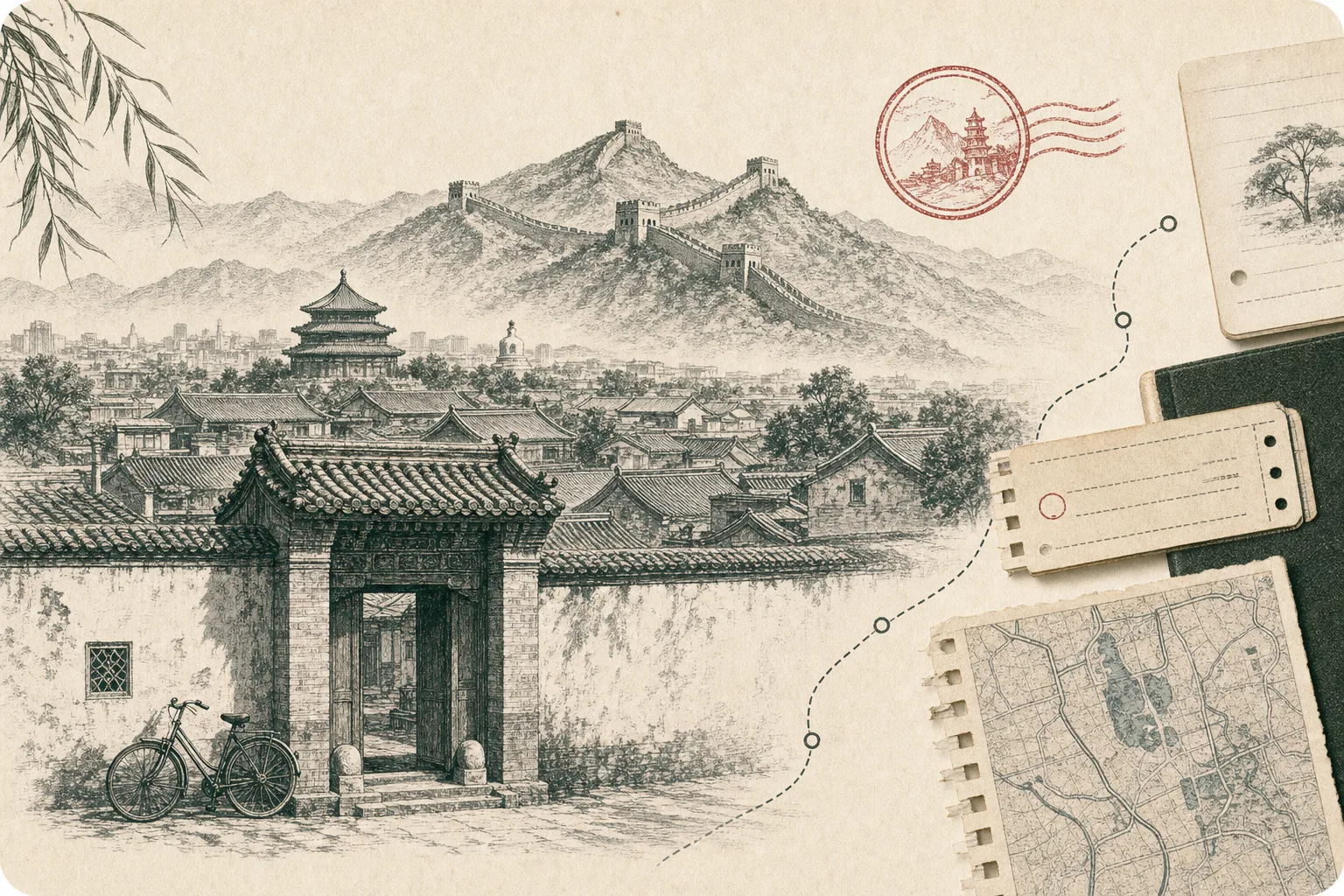
Three days in Beijing is enough for a memorable introduction, but only if you resist treating the city as a checklist. The distances are large, security checks add friction, and several headline sights require advance reservations. A strong independent itinerary therefore groups places by geography and gives each day one clear purpose.
This plan puts the historic center first, uses the second day for the Great Wall, and leaves the third for temples, hutongs, and contemporary street life. It is deliberately adjustable: weather, ticket availability, and your energy should decide the exact order, not a rigid promise to see everything.
- Ideal pace
- Two major sights plus one flexible neighborhood each day
- Useful base
- Near a central metro station inside or just outside the Second Ring Road
- Book first
- Forbidden City admission and your chosen Great Wall transport
- Daily reality
- Long walks, security screening, and early starts
Build the trip around fixed reservations
Before assigning attractions to days, secure the places with timed or identity-linked admission. The Palace Museum is the key constraint for most first visits, and other central sites may also use reservation systems. Enter passport details exactly as shown in your travel document, keep the confirmation accessible offline, and carry the original passport used for the booking.
Once that anchor is confirmed, avoid stacking another hard-to-reach attraction on the same half-day. Beijing plans often fail because a map makes adjacent landmarks look effortless, while the real visit includes long approaches, bag checks, queues, and substantial walking inside enormous compounds.
Day one: follow the imperial north-south axis
Start early around Tiananmen Square and the Forbidden City, following current entry instructions from the relevant official sites. Allow several hours inside the palace rather than racing through only the central halls. Side courtyards and quieter galleries make the scale easier to understand, although individual rooms may close or rotate displays.
Exit toward Jingshan Park if your legs still have energy. The hill gives a useful visual explanation of the old capital's layout. Finish with dinner in a nearby district rather than crossing the city for a famous dish. On a short trip, a calm evening near your route is usually more valuable than another long taxi ride.
Day two: give the Great Wall a full day
Choose one restored section and treat it as the day's main event. Mutianyu generally suits travelers who want broad views and several ascent options, while Badaling offers very established transport and visitor infrastructure. Whichever you choose, confirm opening notices, ticket rules, and transport on official channels shortly before departure.
Leave buffer time for traffic and do not schedule a non-refundable evening activity immediately after returning. Bring water, sun protection, and shoes with reliable grip. Even restored sections involve steep, uneven steps; cable cars reduce the climb to the wall but do not turn the visit into a flat walk.
Day three: temples, lanes, and ordinary Beijing
Begin at the Temple of Heaven or another substantial site that matches your interests, then change scale completely. Spend the afternoon walking a hutong area, stopping in small parks and observing how old lanes connect with newer cafés, shops, and residential life. The point is not to find a supposedly untouched neighborhood, but to experience the city beyond monumental gates.
If crowds or heat are tiring, substitute a museum or a longer tea break. Travelers interested in architecture might choose the Lama Temple and nearby lanes; those who prefer contemporary culture can move toward an arts district. Keep only one of these branches rather than attempting all of them.
Use the metro, then solve the last kilometer
Beijing's metro handles most central journeys efficiently, but station exits can place you several blocks from the entrance you need. Save the attraction's Chinese name and gate, not just its English label. A map app that works reliably in China helps you choose the correct exit and estimate the remaining walk.
For early departures or awkward connections, a licensed taxi or app-based car can be sensible. Build in extra time during commuting periods. Avoid judging travel time by straight-line distance: ring roads, restricted approaches, and large pedestrian compounds make short-looking journeys surprisingly slow.
Protect the plan from fatigue and closures
Many museums close on a regular weekly day, and temporary restrictions can affect central Beijing with little relevance to an old blog itinerary. Recheck each official notice the evening before. In summer, move exposed walking to the morning; in winter, carry layers that can be adjusted between heated interiors and windy courtyards.
Keep one optional stop on each day and be willing to drop it. A three-day visit works when you remember the sensation of the city—the palace roofs, the wall crossing ridges, people gathering in a neighborhood park—not when every hour becomes a transfer.
Notebook check
- Keep passport and reservation screenshots together in one offline folder.
- Choose accommodation for metro access, not for a romantic but inconvenient address.
- Check official attraction notices again within 24 hours of each visit.
The useful takeaway
Anchor the trip with the Forbidden City, reserve one full day for a single Great Wall section, and let the final day reveal Beijing at street level. Three well-grouped days will feel richer than a breathless circuit of distant landmarks.