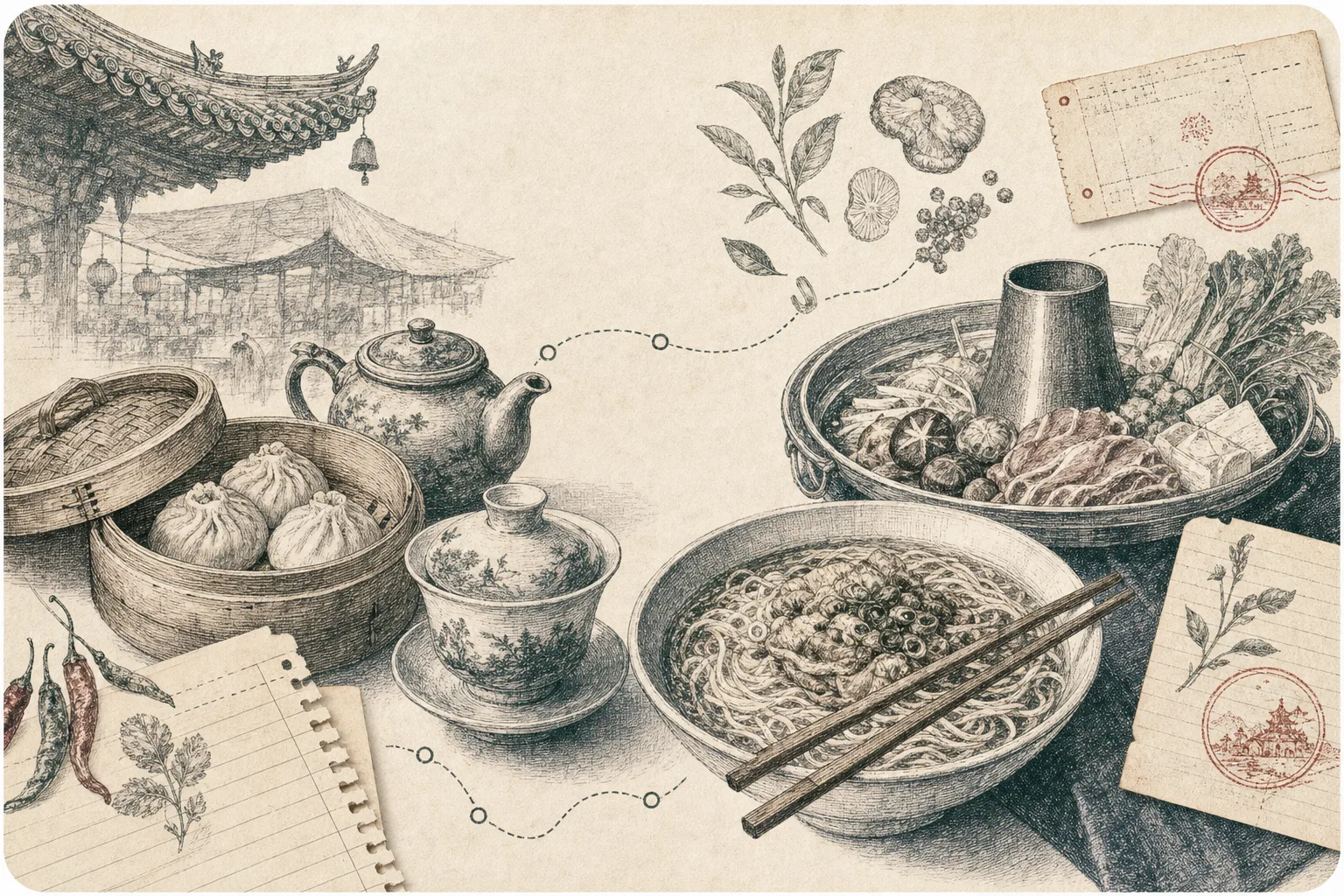
China offers abundant tofu, mushrooms, leafy greens, beans, noodles, rice, wheat foods, and regional vegetable dishes, yet an ordinary vegetable plate may still use pork, stock, lard, oyster sauce, shrimp, or shared cooking oil. The English word vegetarian also does not communicate whether eggs, dairy, alliums, or cross-contact are acceptable.
Successful vegetarian travel depends on saying what you do not eat, not only naming an identity. Save a precise Chinese note, identify a few reliable dish formats, and verify every broth and sauce. Large cities offer specialist restaurants, while smaller places may require a simple custom meal built from plain vegetables, tofu, and a staple.
- Key phrase
- 我吃素, followed by a specific ingredient list
- Hidden risks
- Meat stock, lard, oyster sauce, shrimp, and garnish
- Reliable option
- Clearly labeled vegetarian or Buddhist restaurants
- Backup
- Packaged staples, fruit, nuts, and instant foods you can verify
Define your version clearly
A lacto-ovo vegetarian can state that meat, poultry, fish, and seafood are excluded while eggs and milk are acceptable. A vegan should also exclude eggs, dairy, honey if relevant, and animal fats. Some Buddhist vegetarian cooking excludes garlic, onions, chives, and related alliums for religious reasons, which is a separate preference.
Write the rule as a short list in simplified Chinese and include severe allergies separately. Do not depend on the word vegan being recognized. Ask the staff member to read and confirm, especially when ordering from a QR code that offers no free-text note.
Notebook check
- 我不吃肉、家禽、鱼和海鲜。This excludes meat, poultry, fish, and seafood.
- 请不要放肉汤、猪油、蚝油和虾皮。This asks for no meat stock, lard, oyster sauce, or dried shrimp.
- 鸡蛋和牛奶可以。This says eggs and milk are acceptable; omit it if they are not.
Look for the right restaurant type
Dedicated vegetarian restaurants offer the clearest environment, though mock meats may contain gluten, soy, mushrooms, or additives that matter for allergies. Restaurants associated with Buddhist temples can be excellent, but opening hours may be limited and the dining space may follow quiet or no-waste practices.
Ordinary noodle, dumpling, and home-style restaurants can also work when the kitchen cooks to order. Choose a place with staff willing to answer. At fixed-broth noodle shops, hotpot restaurants, barbecue counters, and buffet stations, avoiding animal products or cross-contact can be much harder.
Build meals from dependable components
Plain rice, steamed buns without filling, stir-fried seasonal greens, tofu with a confirmed sauce, tomato and egg for ovo-vegetarians, cucumber salads, and simple noodle dishes provide a foundation. Order two modest dishes rather than one elaborate item with many hidden components.
Vegetable dumplings and buns need confirmation because the filling or cooking fat may include meat. Mapo tofu commonly contains minced meat unless prepared differently, and a dish whose name highlights eggplant or green beans may still use pork. A photo of visible vegetables proves very little about the sauce.
Prepare for stations and small towns
Bring a compact backup for long rail days and late arrivals: nuts, crackers, fruit that travels safely, nutrition bars, or instant noodles with a verified ingredient list. Airport and station shops may stock more choices than a small destination after 21:00, but labels remain primarily Chinese.
Use a translation camera to check ingredient lists, paying attention to meat powders, gelatin, lard, seafood flavorings, milk, and egg. Allergen statements do not necessarily identify every ingredient you avoid for ethical or religious reasons. Restock in larger cities before remote excursions.
Keep nutrition and pleasure in view
On a longer trip, rotate tofu, soy milk, beans, nuts, eggs or dairy if included, whole grains, and varied vegetables rather than living on plain rice. Travelers with medical or nutritional needs should seek individual professional guidance before departure and carry appropriate supplements.
Vegetarian eating should still reveal regional food. Try Yunnan mushrooms only when professionally identified and fully cooked, different tofu traditions, wheat noodles in the north, rice noodles in the south, seasonal greens, and carefully verified tea snacks. A clear boundary can coexist with curiosity and generous communication.
The useful takeaway
State the exact animal products you avoid, then confirm broth, fat, sauce, garnish, and shared equipment. Keep a small packaged backup for transfers, favor transparent kitchens, and build varied meals from tofu, beans, vegetables, and regional staples instead of relying on a vague vegetarian label.