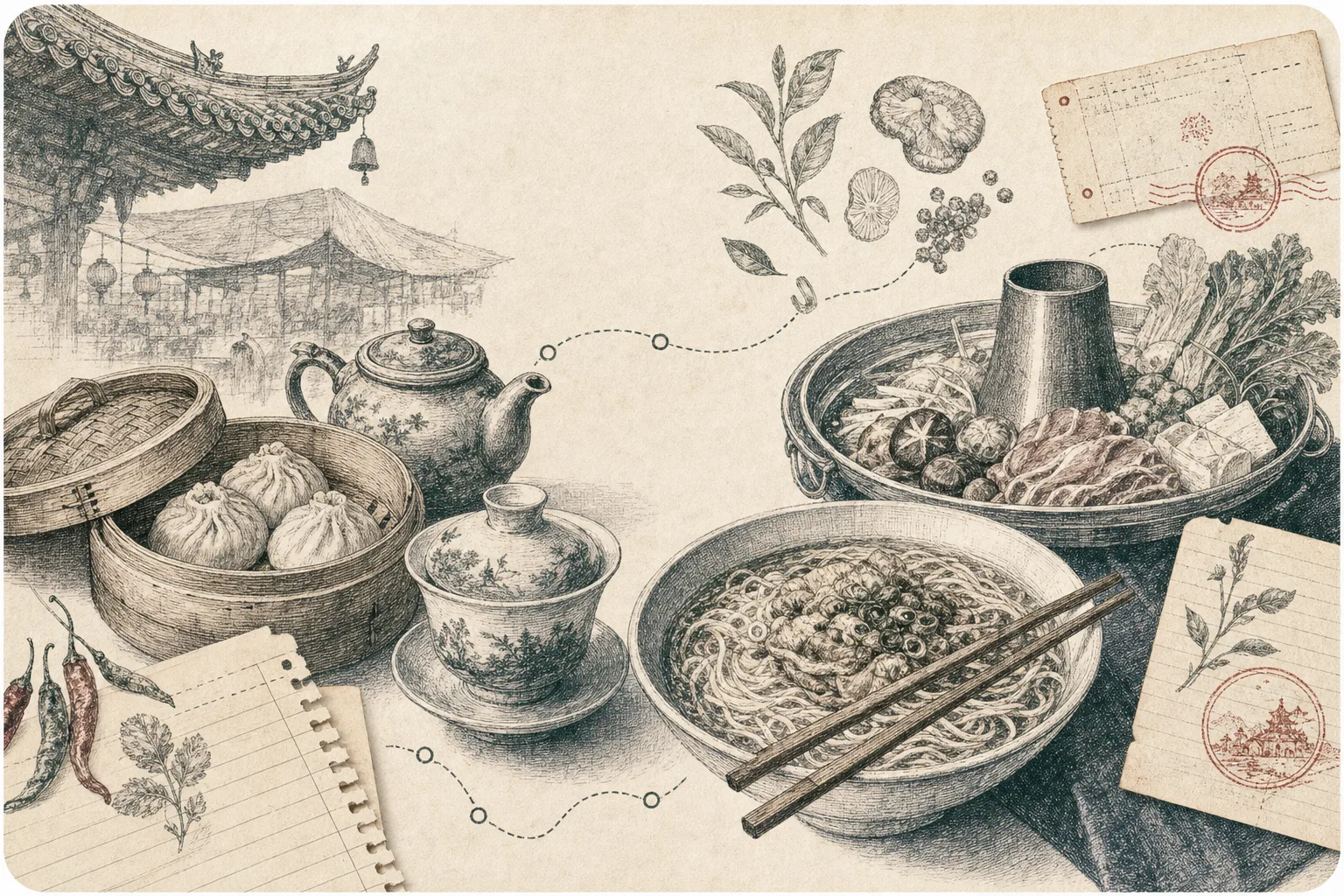
Breakfast in China is not one national menu. A Beijing commuter may eat a crisp filled pancake, a Guangzhou family may share dim sum, a Wuhan worker may mix hot dry noodles, and a Yunnan shop may ladle rice noodles into broth. Many of the best options are made for local morning routines and sell out well before travelers begin sightseeing.
Go out between roughly 06:30 and 09:00, observe what is being prepared continuously, and order one or two small items rather than trying to stage a banquet. Hours differ by city, season, and business, so ask your accommodation where residents eat now. The reward is not a ranking of famous dishes but a glimpse of how each place starts its day.
- Best window
- Early morning, before commuter trade ends
- Ordering style
- Counter, stall, QR code, or pay-first ticket
- Typical flavors
- Savory, warm, fast, and regionally specific
- Good strategy
- Share small portions across two nearby stops
Begin with buns, dumplings, and breads
Steamed baozi can hold pork, beef, vegetables, or sweet bean paste, while mantou are usually unfilled steamed breads. Pan-fried buns and dumplings add a crisp base but may release hot broth, so bite cautiously. Filling names matter for allergies and dietary rules; vegetable does not guarantee the absence of meat fat or stock.
In northern and northwestern cities, flatbreads, baked breads, and filled pastries may be the main breakfast rather than a side. Buy one fresh item, notice whether price is per piece or weight, and eat near the stall only where standing does not block commuters.
Try the griddle breakfasts
Jianbing layers batter, egg, sauce, herbs, and a crisp element into a folded pancake, with local variations in grain and filling. It is made to order, so point to ingredients you do not want before they hit the griddle. Sausage or processed meat may cost extra and is optional.
Other cities have stuffed pancakes, scallion breads, rice rolls, or fried dough prepared on flat griddles and steam trays. Rather than asking which is authentic, look for a stall serving a steady local queue and watch one order before yours. This reveals the sequence for paying, customizing, and collecting.
Pair soy milk with fried dough thoughtfully
Warm soy milk and youtiao, long pieces of fried dough, form a familiar pairing in many regions. Soy milk may be sweetened or unsweetened; ask rather than assuming. Youtiao are best immediately after frying but remain rich, so share one alongside a bun, egg, or fruit later in the morning.
Some northern cities serve fermented mung-bean drinks or savory tofu pudding whose flavors surprise visitors expecting dessert. Taste a small portion without framing a strong local preference as a dare. Condiments can include chili, pickled vegetables, sesame, peanuts, or shellfish-based elements, so allergy questions still matter at breakfast.
Follow noodles and rice across regions
Wuhan's hot dry noodles, Chongqing or Sichuan noodle bowls, Lanzhou beef noodles, and many local rice-noodle soups are complete morning meals. Ordering involves choices such as portion, chili, broth, toppings, or noodle thickness. A photograph and a simple small-portion request can bridge most language gaps.
In the south, congee, steamed rice rolls, sticky-rice parcels, or rice cakes may dominate. Congee can contain fish, pork, preserved egg, peanuts, or no animal ingredients, depending on the pot. Ask before adding a condiment whose contents are unclear.
Make room for a longer breakfast
Cantonese morning tea is a different rhythm: tea with several small dishes ordered over time. It can be quick, but it rewards a table and conversation. Arrive early on weekends, ask whether tea and table charges apply, and order two or three items before adding more.
Elsewhere, a market breakfast can become the longer meal. Walk through once, choose a cooked dish from a clean and busy vendor, and sit only where customers are invited. Ask before photographing preparation at close range, particularly when it interrupts service.
Eat safely without sterilizing the experience
Favor food cooked in front of you and served steaming hot. Check that raw ingredients are protected, utensils look clean, and the stall has a reliable customer flow. Avoid dishes that have sat lukewarm, and use bottled or otherwise safe drinking water according to local guidance.
Carry tissues, hand sanitizer, small cash where useful, and a working mobile-payment backup. People eat quickly at peak time, so share tables when invited and clear the seat promptly. Return on another morning rather than ordering more than you can finish for the sake of sampling.
The useful takeaway
Wake early, choose places cooking continuously for local customers, and share small portions across a few regional staples. Learn whether fillings, broths, and condiments match your diet, then follow the breakfast rhythm of the city instead of searching for one national must-eat list.