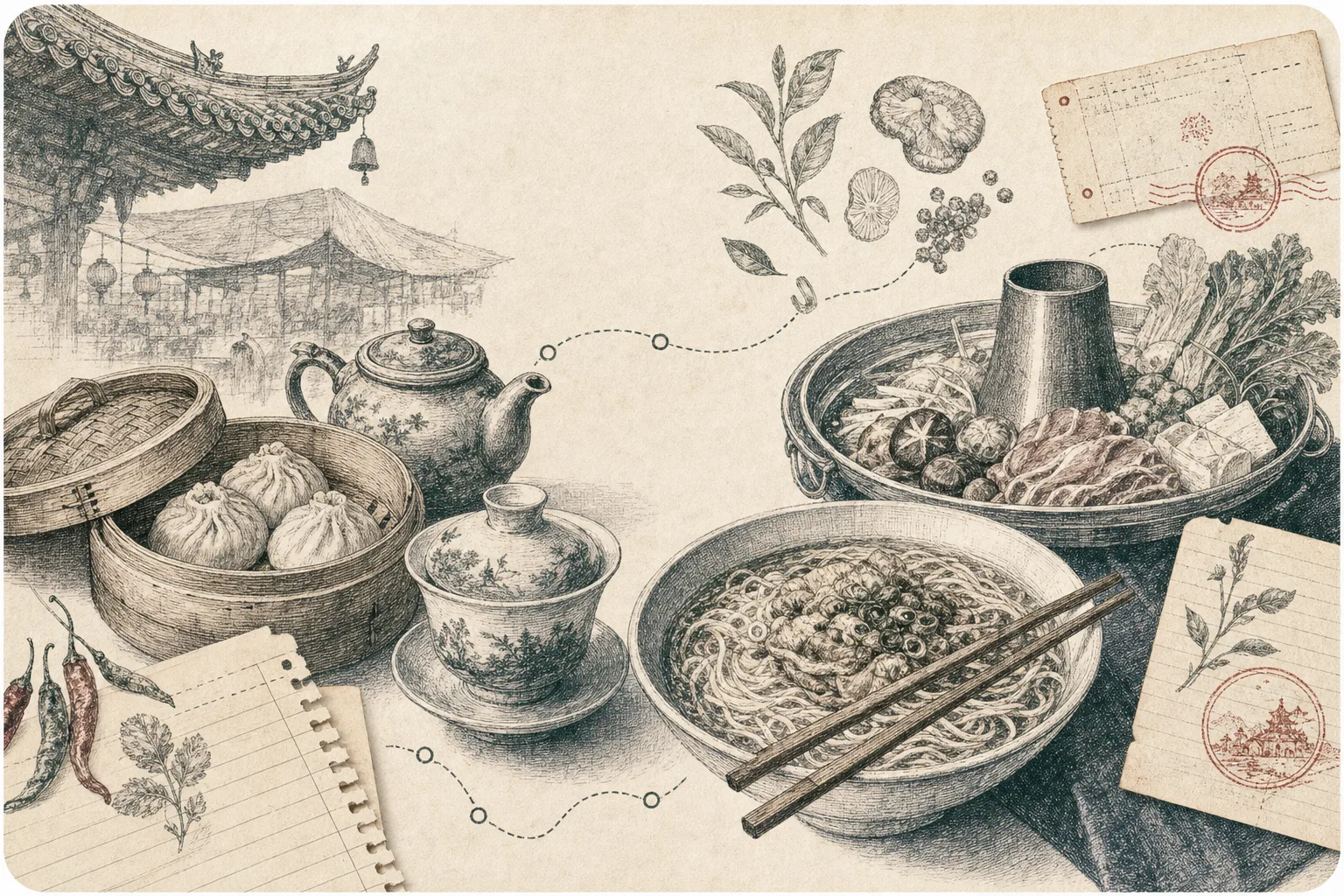
Eating well in China does not require fluent Chinese, but it does reward preparation beyond pointing at a photograph. Menus may be ordered through a QR code, written only in Chinese, displayed on a wall, or discussed at a case of ingredients. Portions, shared dishes, spice, bones, broth, and cooking methods can be hard to infer from translation alone.
The most reliable approach combines a short offline note, visual translation, simple questions, and observation of how the restaurant works. Treat staff as collaborators rather than as a language test. Confirm important allergies twice, order modestly at first, and keep enough flexibility to choose another restaurant when communication or ingredient control is not adequate.
- Best tool
- Offline translation plus saved Chinese sentences
- Ordering unit
- Usually shared dishes, with individual staples
- For restrictions
- Name ingredients and cross-contact risk clearly
- Safe default
- Start small, then add dishes if needed
Prepare a small language kit
Save your restrictions in simplified Chinese, including what happens medically if exposure occurs. A list of prohibited ingredients is clearer than a broad label such as healthy, vegetarian, or gluten-free. Keep screenshots offline because a QR menu may load slowly or require a local app.
Useful questions cover the main ingredient, cooking method, spice level, portion size, and whether a dish contains meat broth, lard, shellfish, peanuts, sesame, or another concern. Machine translation handles short concrete sentences better than a long explanation. Show one request at a time and ask the staff member to confirm.
Notebook check
- 我对花生严重过敏。This says: I have a severe peanut allergy.
- 这个菜里面有什么?This asks: What is in this dish?
- 不要辣。This asks for no chili heat, though the kitchen may not be able to remove it from a prepared base.
Handle spice and bones precisely
Not spicy can mean no fresh chilies, yet a sauce, broth, pickled ingredient, or cooking oil may already contain heat. Ask whether the base can truly be changed. If you tolerate a little chili, requesting mildly spicy may work better than expecting a famously spicy regional dish to become neutral.
Meat and fish are often cut with bones, and small fragments require attention. Whole fish may be priced by weight and presented for confirmation. Ask the price and approximate total before cooking. Children should be helped rather than given unfamiliar bone-in pieces without checking.
Confirm payment and the bill
Ask whether foreign cards, cash, or your mobile-payment setup is accepted before a large meal. Payment may happen at the table, at a cashier, or inside the ordering app. Keep a backup method and never hand an unlocked phone to a stranger for more than the immediate payment step.
Review the item list, tableware charges, tea charges, weight-based items, and any deposit. A discrepancy is usually easiest to solve by pointing calmly at the bill and the table. Tipping is not generally expected in ordinary restaurants, although hotel and international settings may follow different practices.
Use food-safety judgment
Choose busy, well-run places where ingredients are protected and hot food arrives hot. At hotpot or barbecue, keep raw and cooked utensils separate and cook meat, poultry, seafood, and eggs thoroughly. Drink safe water and wash or sanitize hands before eating.
For a severe allergy or celiac disease, language preparation cannot eliminate cross-contact in a shared kitchen. Carry prescribed medication, know how to reach medical help, and leave if the staff cannot confidently answer. A simpler packaged or clearly prepared meal is a sensible decision, not a missed cultural experience.
The useful takeaway
Save short Chinese ingredient warnings offline, ask concrete questions, and start with a modest shared order. Confirm spice bases, bones, prices, and payment before problems develop, and treat serious dietary restrictions as a safety requirement that may justify choosing a simpler restaurant.