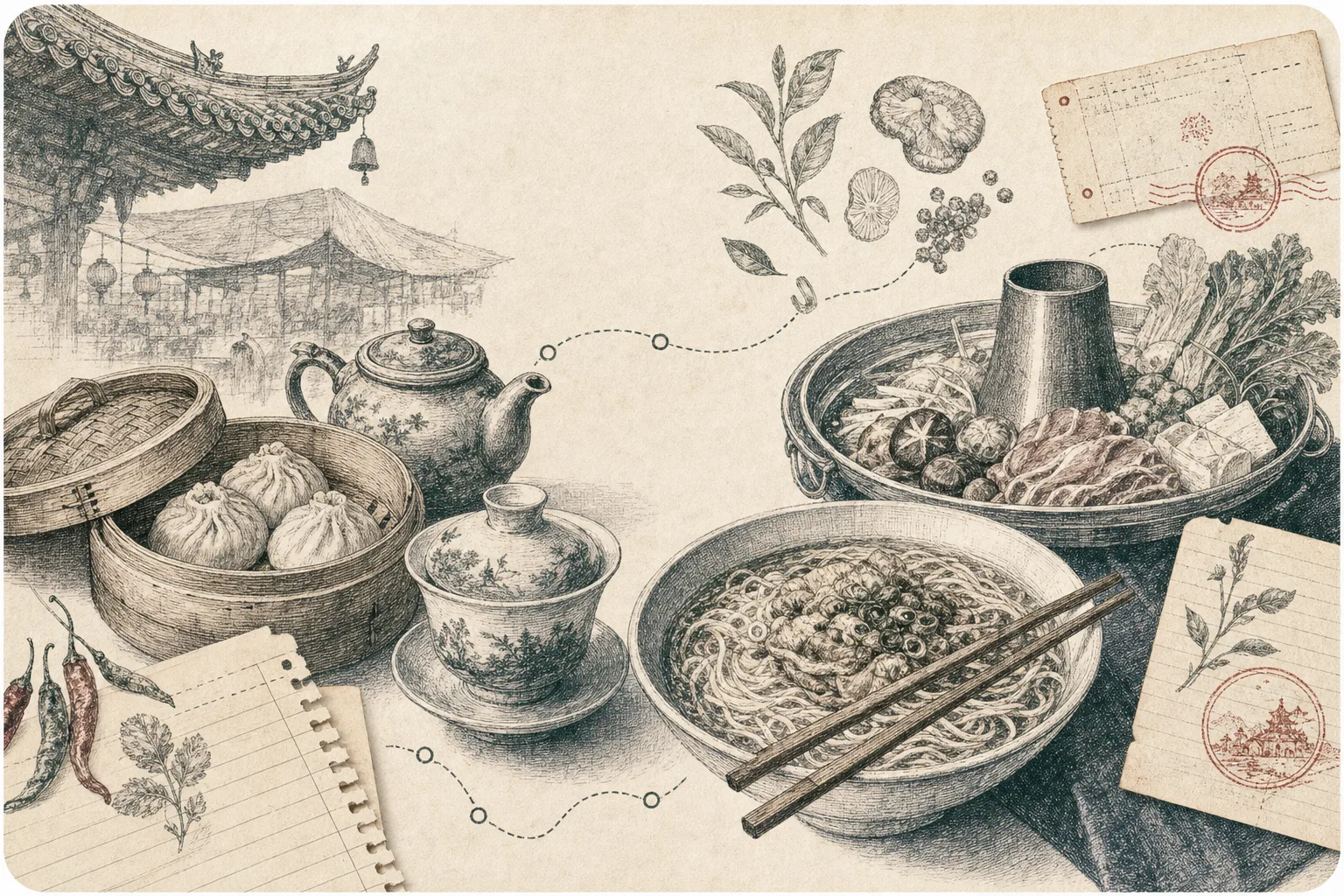
Hotpot is a method and a social meal, not one recipe. Chongqing's beef-fat-and-chili broth, Sichuan's aromatic variations, Beijing-style sliced mutton, Chaoshan beef hotpot, Yunnan mushroom pots, and coconut-based pots in Hainan create different ingredient lists and table rhythms. The common action is cooking together in a simmering vessel.
A first meal becomes simple when the group agrees on broth, orders one modest round, separates raw and cooked utensils, and asks staff about cooking times. Restaurants often use QR menus and set meals, while oil, sauces, tea, and disposable tableware may be charged separately. Confirm the structure before the pot arrives.
- First decision
- Broth style and whether a divided pot is available
- Order size
- Begin with a few half portions, then add
- Food safety
- Separate raw utensils and cook proteins fully
- Diet warning
- Clear-looking broth may still contain meat or allergens
Recognize a few regional patterns
Chongqing hotpot is often intensely flavored with chilies, Sichuan pepper, and beef fat. Chengdu and wider Sichuan offer many related broths and more divided-pot options. In Beijing, a chimney-shaped copper pot traditionally supports quickly cooked mutton with sesame-based dipping sauce.
Chaoshan beef hotpot emphasizes fresh beef cuts, clear broth, precise cooking, and a savory dipping sauce. Yunnan mushroom pots may require strict supervised boiling because some wild mushrooms are unsafe when undercooked. Hainan coconut chicken uses a gentler, lightly sweet base. These labels describe tendencies, not fixed rules for every restaurant.
Choose the broth honestly
Do not order maximum heat to prove courage. Ask for mild, medium, or a divided pot, understanding that a spicy prepared base may not become truly mild. A two- or three-section pot lets diners separate heat preferences, but splashing utensils between sections defeats the purpose for allergies or strict diets.
Confirm whether the broth contains beef fat, pork bones, chicken stock, seafood, dairy, peanuts, sesame, soy, or fermented ingredients. Plain water or tomato broth is not automatically vegetarian. For severe allergy or religious dietary needs, a shared kitchen and shared pot may not provide adequate control.
Order one round at a time
A balanced first order might include a sliced meat or tofu, leafy greens, mushrooms, a root vegetable, a starch, and one regional specialty. Ask for half portions where offered. Offal and unusual cuts are optional, not a test of respect, and photographs may not reveal portion size.
Different ingredients change the broth and cooking sequence. Start items that take longer, then cook delicate slices in smaller batches. Leafy vegetables and noodles can absorb concentrated salt and chili later in the meal. If uncertain, ask staff to place the first round and show the correct timing.
Keep raw and cooked food apart
Use the provided basket, chopsticks, or tongs for raw meat and a separate eating utensil for cooked food. Bring the broth back to an active simmer after adding a large batch. Poultry, meatballs, seafood, eggs, and thick pieces need thorough cooking; color alone is not a reliable test.
Never sample a mushroom until staff confirm the required cooking period has finished, particularly in Yunnan. Children should not reach across a boiling pot, and loose sleeves and phone straps should stay away from burners. Ask staff for help if the flame, induction cooker, or broth level seems unsafe.
Build a dipping sauce that fits
Chongqing diners often use sesame oil, garlic, and selected herbs, while northern mutton hotpot commonly pairs with a thicker sesame sauce. Chaoshan beef may come with a fermented or savory regional sauce. Self-service bars invite customization but also create allergen and cross-contact risk.
Begin with a small bowl and taste before adding more salt, chili, vinegar, or fermented bean products. Do not assume sesame paste and peanut sauce are interchangeable. If allergies matter, ask for unopened or kitchen-controlled condiments rather than using communal containers.
Finish and pay without surprises
The broth becomes saltier and richer over time, so drinking it at the end may not be intended or comfortable. Add noodles only if there is appetite left. Pack leftovers solely where the restaurant permits and where raw and cooked food can be kept safely separate.
Review charges for broth, sauce bar, tea, tableware, service, and weight-priced items. Payment may be by mobile app or cashier. Hotpot is best paced over conversation, but busy restaurants can impose a seating limit; check at entry rather than discovering it halfway through the meal.
The useful takeaway
Choose a broth that the whole table can actually eat, order a small balanced first round, and let staff demonstrate local cooking times. Keep raw utensils separate, confirm hidden animal products and allergens, and enjoy regional differences without treating heat or unfamiliar cuts as a challenge.